

Accepting Credit Card Payments On Your Phone
Read More
Sep 18, 2024
Filed under: Credit Card Processing, Mobile Payments
From mobile credit card readers to smart terminals, explore the types of credit card readers available for your small business.

WRITTEN & RESEARCHED BY
Editor & Senior Staff Writer
Last updated onUpdated

REVIEWED BY
Expert Contributor
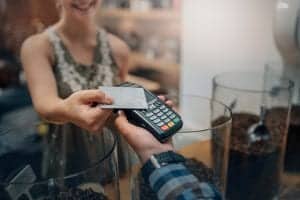
Customers increasingly expect businesses to accept debit cards, credit cards, and contactless payments wherever they shop. Credit card readers make that possible by allowing merchants to accept payments at a countertop, around a store, at events, or on the go.
Let’s look at the main types of credit card readers available and how each one works so you can choose the right payment device for your business.
| Card Reader Type | Best For | Requires Separate Device? | Key Advantage |
|---|---|---|---|
| Mobile card reader | On-the-go and low-cost payments | Yes | Affordable and portable |
| Smart terminal | Mobile or countertop POS use | No | Runs POS software independently |
| Virtual terminal | Phone and remote payments | No physical reader | Accepts manually entered payments |
There are several types of credit card readers. The best choice depends on where you accept payments, whether you want an all-in-one device, and how much you’re prepared to spend.
Mobile card readers are small devices that pair with a smartphone or tablet running a mobile POS app, usually through Bluetooth. Most accept EMV chip and NFC contactless payments, while some also support magstripe cards.
Basic readers may not include a screen or PIN pad, while more advanced models support features such as PIN debit. Most are rechargeable and designed to last through a typical sales day.
Mobile readers are generally the most affordable and portable option. However, confirm that a reader works with your preferred processor, POS app, and mobile device before purchasing it.
Smart terminals combine payment hardware and POS software in one portable device, eliminating the need for a separate phone or tablet.
Most include a touchscreen and can ring up sales, display order details, collect tips, and send receipts. Some also have built-in receipt printers, barcode scanners, or cameras.
Smart terminals work well for countertop checkout, tableside payments, food trucks, and service businesses. They offer more functionality than mobile readers but typically cost more.
A virtual terminal is a software application that lets you manually enter a customer’s card information through a web browser or payment app. It is not a physical card reader.
Virtual terminals are primarily used for phone orders and other remote payments. They can be useful for contractors, professional services, delivery businesses, and merchants that occasionally take payments without the cardholder present.
Some processors include virtual terminal access at no additional cost, while others charge a monthly fee. Manually entered transactions also tend to have higher processing rates and fraud risk than card-present payments.
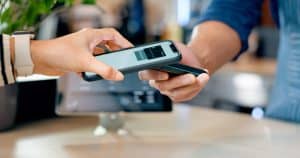
Contactless card readers use near-field communication (NFC) technology to accept tap-to-pay transactions. Customers can pay by tapping an NFC-enabled credit or debit card, smartphone, or wearable device that uses a digital wallet such as Apple Pay or Google Pay.
Most modern mobile card readers and smart terminals support contactless payments.
The right credit card reader should fit how and where your business accepts payments. Before choosing a device, compare:
Once you understand your payment needs and total costs, you can choose a reader that works for your business and gives customers a convenient checkout experience.




Want to help shape the future of the Merchant Maverick website? Join our testing and survey community!
By providing feedback on how we can improve, you can earn gift cards and get early access to new features.
 Square POS is an intuitive and simple point of sale platform. It offers customizable tools and a variety of add-ons to fit your business needs and reach your goals.
Get Started
Square POS is an intuitive and simple point of sale platform. It offers customizable tools and a variety of add-ons to fit your business needs and reach your goals.
Get Started
Help us to improve by providing some feedback on your experience today.
The vendors that appear on this list were chosen by subject matter experts on the basis of product quality, wide usage and availability, and positive reputation.
Merchant Maverick’s ratings are editorial in nature, and are not aggregated from user reviews. Each staff reviewer at Merchant Maverick is a subject matter expert with experience researching, testing, and evaluating small business software and services. The rating of this company or service is based on the author’s expert opinion and analysis of the product, and assessed and seconded by another subject matter expert on staff before publication. Merchant Maverick’s ratings are not influenced by affiliate partnerships.
Our unbiased reviews and content are supported in part by affiliate partnerships, and we adhere to strict guidelines to preserve editorial integrity. The editorial content on this page is not provided by any of the companies mentioned and has not been reviewed, approved or otherwise endorsed by any of these entities. Opinions expressed here are author’s alone.
Square POS is an intuitive and simple point of sale platform. It offers customizable tools and a variety of add-ons to fit your business needs and reach your goals.
Get Started