

10 Reasons Why You Shouldn’t Lease Equipment
Read More
Dec 15, 2025
Filed under: Equipment Financing
What is business equipment financing, and where can you find the best way to finance equipment for your small business? Find out here.

WRITTEN & RESEARCHED BY
Expert Contributor
Last updated onUpdated

REVIEWED BY
Editor & Senior Staff Writer
Equipment financing isn’t the only way for businesses to purchase equipment and hard assets, but it offers some distinct advantages over more general types of financing.
Below, we’ll cover the basics of equipment financing to help you determine if this funding option is best for your business.
Table of Contents
Equipment financing refers to loans or leases used to purchase business equipment. These assets serve as collateral until the loan is paid off.
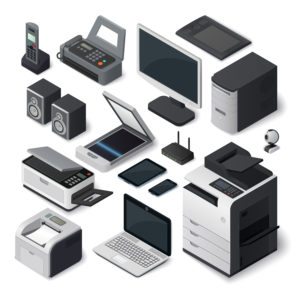
“Equipment” can be defined fairly loosely in practice, but in almost all cases, it describes some kind of tangible asset used in your business operations. Equipment may include:
Equipment does not typically include debt servicing, labor expenses, real estate, or buildings.
Equipment financing generally comes in the form of an installment loan. Some lenders offer equipment lines of credit as an alternative to equipment loans.
On the surface, equipment loans are a lot like other medium-to-long-term installment loans. If you successfully apply, you’ll receive a lump sum of money. Your loan will accumulate interest over time at either fixed or variable rates, and you’ll make regular payments over the loan’s term. In the case of equipment loans, this is usually a monthly payment.
The major difference between equipment financing and traditional installment loans is that the equipment you’re acquiring serves as collateral for the loan. In this sense, equipment loans are secured loans.
You’ll generally want to know what equipment you’re planning to buy when you apply for the loan, including the vendor you’re planning to buy it from. Depending on the lender, the money may be paid directly to the vendor instead of to you.
Lenders may file a UCC lien on the equipment or business assets until the loan is repaid.
One variation on the equipment loan you may come across is the equipment line of credit. The purpose of an equipment line of credit is identical to that of an equipment loan — it just provides you a bit more leeway.
An equipment line of credit is extended to a borrower to purchase equipment. Instead of approving you for a specific purchase, it grants you a credit limit that you can draw on to buy items within an approved window of time. Some equipment lines of credit allow multiple draws during a set period before converting into a term loan.
They’re a little more flexible in that you don’t necessarily need to know exactly what model and vendor you’re choosing when you apply for the loan.
After you’ve made your purchases and/or the buying window expires, an equipment line of credit will effectively become an equipment loan, accruing interest over time.
Traditionally, it was common for equipment loans to require a down payment, but it’s possible to find equipment financing that covers the total cost of the asset.
Keep in mind that shipping and delivery of the equipment and other “soft costs” may not be included. There are exceptions to these rules, depending on the lender and your qualifications
Note that 100% financing is more common for strong borrowers or high-value equipment.
Equipment financing has plenty of benefits, but there are some risks and drawbacks worth noting as well.
Pros
Cons
With all of this in mind, why would you want an equipment loan over another type of financing?
Equipment loans have a nifty feature built into them that reduces risk to both the lender and the borrower, which in turn means better rates and terms on average.
Normally, if you want a secured loan, you have to put up collateral as security for the loan. The lender can then repossess your collateral if you default.
With equipment loans, the equipment you purchase with the loan becomes the collateral. If you default, the lender collects the equipment and resells it. In many cases, the equipment secures the loan, though lenders may still require a personal guarantee.
Equipment financing generally refers specifically to equipment loans, but it’s not the only way to finance equipment. Leasing can also be an effective way to acquire equipment. When should you consider a lease versus a loan?
Traditionally, leasing meant something like “renting,” but leasing has evolved to include both rental agreements and “equipment financing agreements.” Equipment financing agreements, often referred to as finance leases (formerly capital leases), are used to purchase equipment rather than rent it.
In most cases, an equipment loan will have a lower rate than a similar equipment lease, but leasing companies can often accommodate a greater variety of circumstances than a loan, including lessees with bad credit.
Equipment lease financing is also more likely to cover soft costs like delivery and installation. And if the type of equipment you’re looking at becomes obsolete quickly, you may be better off leasing it.
Equipment financing rates vary greatly depending on the lending institution and profile of the borrower. Additionally, the type and cost of the equipment may affect your repayment term length.
Typically, you’re looking at:
Note that some lenders use factor rates instead of APR.
Now, let’s take a look at where you can go to get equipment financing.
Equipment financing can be an excellent way to buy critical equipment for your business. If you’re ready to purchase, start your search with the best equipment financing to find a reputable lender to work with throughout the purchasing process. Good luck!




Want to help shape the future of the Merchant Maverick website? Join our testing and survey community!
By providing feedback on how we can improve, you can earn gift cards and get early access to new features.
 Our expert reviewers found BusinessLoans.com to have a quick and easy application process alongside excellent support and guidance for borrowers.
Start A Quick Application
Our expert reviewers found BusinessLoans.com to have a quick and easy application process alongside excellent support and guidance for borrowers.
Start A Quick Application
Help us to improve by providing some feedback on your experience today.
The vendors that appear on this list were chosen by subject matter experts on the basis of product quality, wide usage and availability, and positive reputation.
Merchant Maverick’s ratings are editorial in nature, and are not aggregated from user reviews. Each staff reviewer at Merchant Maverick is a subject matter expert with experience researching, testing, and evaluating small business software and services. The rating of this company or service is based on the author’s expert opinion and analysis of the product, and assessed and seconded by another subject matter expert on staff before publication. Merchant Maverick’s ratings are not influenced by affiliate partnerships.
Our unbiased reviews and content are supported in part by affiliate partnerships, and we adhere to strict guidelines to preserve editorial integrity. The editorial content on this page is not provided by any of the companies mentioned and has not been reviewed, approved or otherwise endorsed by any of these entities. Opinions expressed here are author’s alone.
Our expert reviewers found BusinessLoans.com to have a quick and easy application process alongside excellent support and guidance for borrowers.
Start A Quick Application